Classic vehicles more than 40 years old no longer need an MoT………?
Why did these changes happen? Ultimately it was down to the Department for Transport, who say that historic vehicles are generally well maintained and used mostly for short journeys, and that the modern MoT is no longer relevant to vehicles over 40 years old. (yes in some cases, although a 41-year-old K100 will comfortably pass a modern brake test, well it should do)
The DfT consulted with 2141 individuals, clubs, trade bodies and businesses before making its decision, and of those just 899 were in favour of extending the exemptions, with 1130 opposed. The option will remain for owners of more-than-40-year-old classics to voluntarily submit their vehicles for an MoT. Note; just 6% of owners of pre-1960 vehicles – (at the time it was first introduced) those previously exempt from the test – still underwent testing before the new rules came in! So overwhelmingly, most don’t get their vehicles MOT’ed once over 40 years old.
When you get something like this come along, there are exceptions, and in this case lots of them.
The main one, which gave confusion when the changes were first announced, is that the 40-year rule does not apply if the vehicle has been substantially changed in the past 30 years.
Obviously, some debate took place about this clause – what constitutes ‘a substantial change’? – but the government say they clarified the issue.
You can read the full government guidelines here the rules state that ‘substantially changed’ refers to the technical characteristics of the main components being altered.
The main components are the:
chassis
monocoque bodyshell
axles and running gear
engine
Key changes affecting exemption include:
Changing the engine
(Except if it’s the same basic engine with alternative cubic capacities)
Changing the chassis or monocoque bodyshell, including subframes
(Except of it’s a replacement of the same pattern as the original)
Changing the axles or running gear
(Only if the type or method of suspension or steering is altered)
There are exceptions to that and do not count as “substantial changes” to the main components. To further complicate matters, the “substantial changes” rules are themselves subject to lots of sub-clauses. For instance, they won’t apply if:
– the changes were made to preserve a vehicle where original parts are no longer available
– the changes were made when vehicles of the type were in production or in general use (within 10 years of the end of production)
– changes were made to axles and running gear in order to improve efficiency, safety or environmental performance ( one would think leading link forks and car tyres would fall under this one in regards to sidecar outfits).
Vehicles that are still in production are not exempt, (though I am struggling to think of any model that have been in production for more than 40 years anyway).
One issue is the new MOT, with its changes, it meant that many Classic or Historic vehicles would never pass, brake test being one, lights being another. Just think, if you rocked up with this Sunbeam Outfit, out popped a 20-year-old lad to MOT it, just imagine the look on his face. Block brakes, carbide lamp or acetylene head lamp, basically what are bicycle tyres.
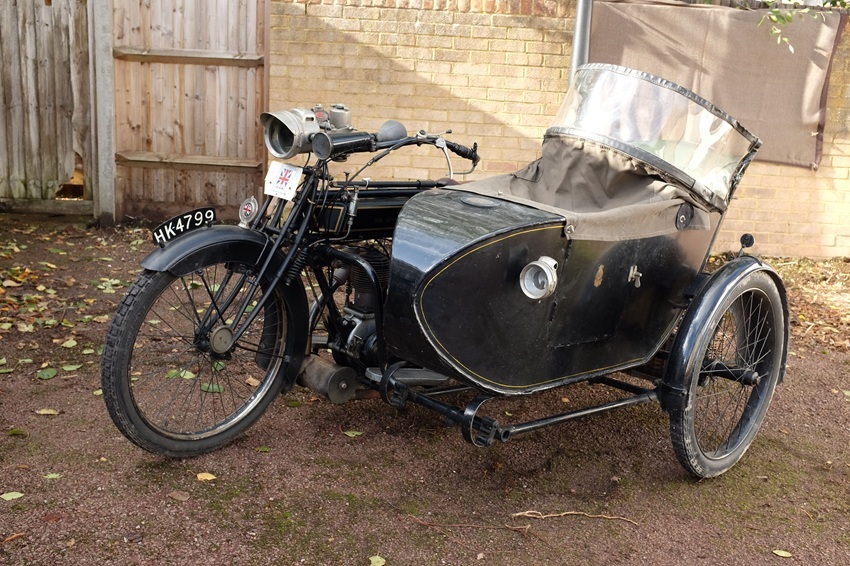
So, we could safely say, what is the point of taking it for an MOT, cos the owner is probably going to know more than the MOT inspector in all honesty, but I guess the MOT inspector could check bearings, fixings, tyres, wheels etc and the like, but there would be no way all the contents of today’s MOT manual could be applied.
Now moving on; Outfits that are just over 40 years old like this K100 below. Provide everything is in fine fettle as they say in the South Yorks Sidecar Club, it will pass the modern MOT of today including the rolling road brake test with ease. So, one could argue, it should be MOT’ed even though it is over 40 years old. But the DfT has to set a clear definition of when a vehicle is classed as a Classic / Historic vehicle, which after a consultation was set at over 40 years. Will this change in the future, we will have to see.
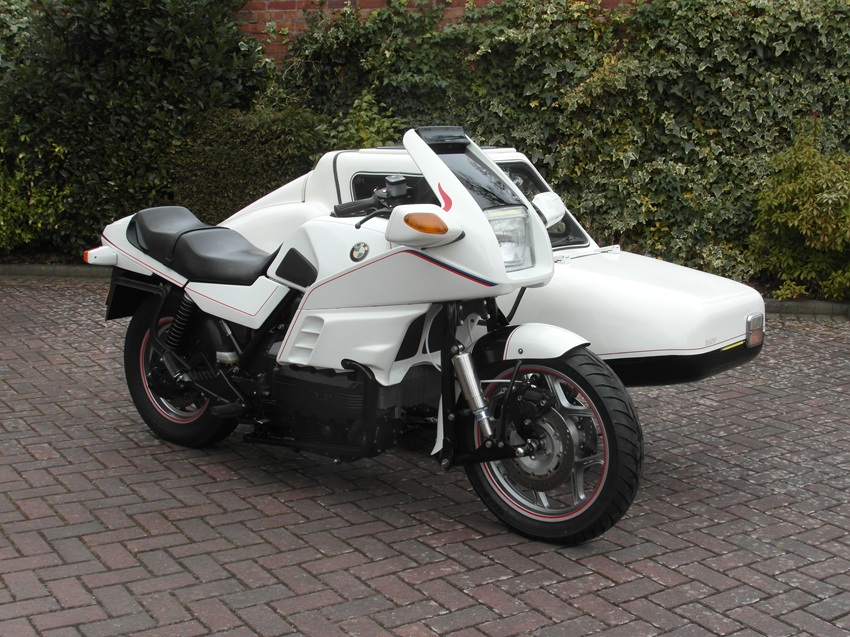
Insurance; this is the biggy, some insurances state the vehicle must be MOT’ed, in fact in the event of a claim I do know (in some cases) that the accessor will check the mileage and ask to see the MOT (although it can be seen online if the vehicle is MOT’ed but doesn’t display the mileage of the vehicle). So, check your insurance policy, while it may be over 40 years old and exempt, if your insurance policy states it must have a current MOT to be insured, then you may well need to have a current MOT.
Also note that generally in terms and conditions of any insurance policy, there will be a clause which states that the vehicle must be maintained in a roadworthy condition. In the event of an accident that leads to a subsequent claim, the vehicle again may be inspected by an engineer. During this inspection, the engineer will advise whether the incident in question was caused due to unsatisfactory maintenance of the vehicle or not.
I think this is obvious, but the rules clearly state that you are still obligated to “keep the vehicle in a roadworthy condition”.
So that is it basically, one exemption which is going to apply to many outfits is – changes were made to axles and running gear in order to improve efficiency, safety or environmental performance. Which I would think leading link forks and car tyres would fall under this one in regards to sidecar outfits.
There is a link provided to the full government guidelines and I would read them before you submit the MOT/ certificate exemption certificate. Here is the link again https://www.gov.uk/government/publications/historic-classic-vehicles-mot-exemption-criteria/historic-classic-vehicles-mot-exemption-criteria–2
Final few words; I do think the regulations are aimed at those who, cut frames, fit car engines, make a complete one piece chassis, build a trike and register it with a Reliant V5 etc.
One has to ask, is the Dft going to bother to take proceedings against someone that’s fitted Leading link forks, car tyres , added a few welded lugs to a frame to mount a Sidecar, I doubt it because without a shadow of doubt Leading link forks, car tyres clearly improve efficiency and safety. At the end of the day, the main thing is that your Outfit is safe and it is in a roadworthy condition.
Final two pictures; I took these in 2010, believe it or not the outfit had a current MOT at the time. If it is still about today, (unless the sidecar has fell off by now) as no modifications other than bolting on a sidecar, do to it’s age I think it possibly would be exempt from having an MOT.
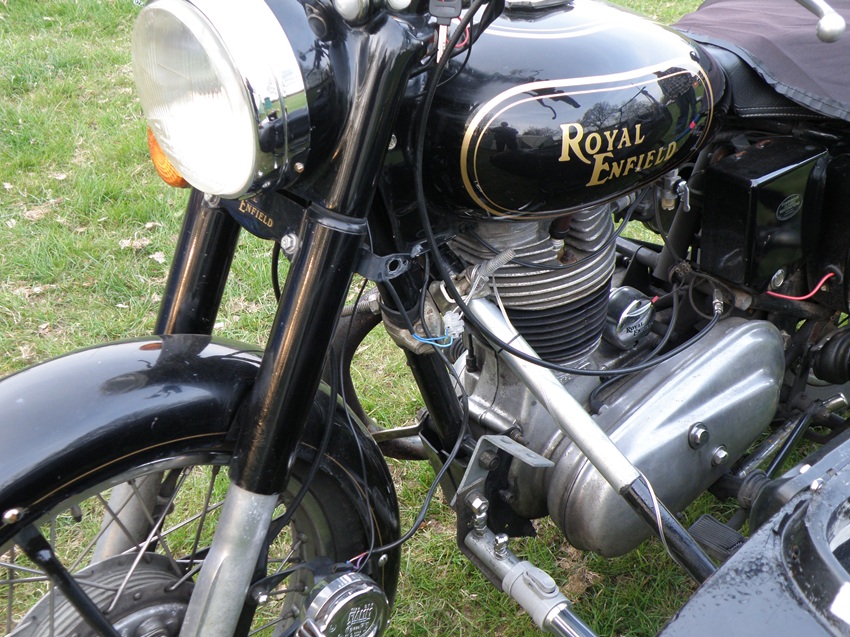
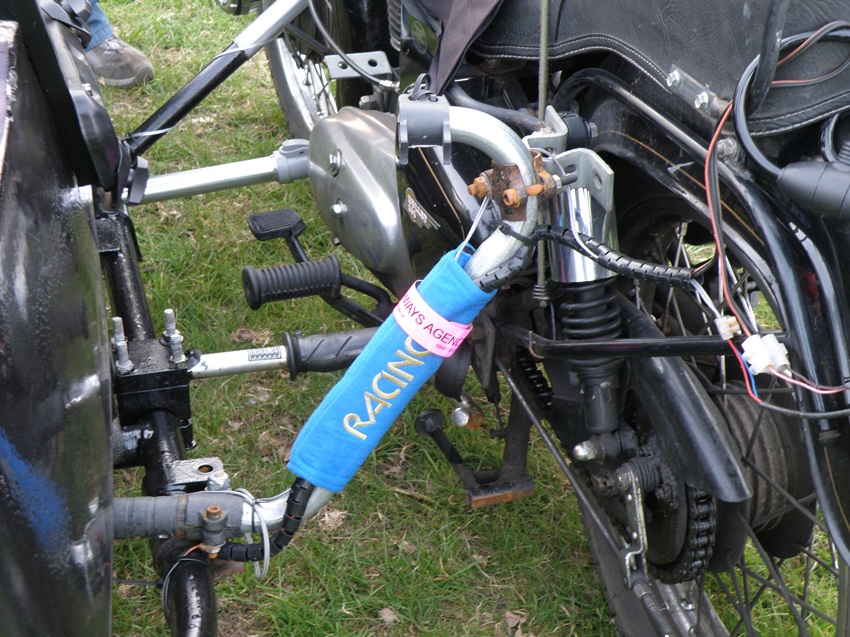
Your eyes do not deceive, what you see is vacuum cleaner pipes, scaffold clip , TV aerial tube and a very special bracket on the top of the rear suspension and a even more special attachment for the front lower vacuum pipe to the frame.
Tri-Anglia Wheels Sidecar Club (Sidecarland) assume no responsibility or liability for any injury, loss or damage incurred as a result of any use or reliance upon the information and material contained within or used from its website.